When Upper Blepharoplasty May Be Covered by Insurance
Upper blepharoplasty may be functional when excess eyelid skin affects vision. Here is how evaluation and documentation work.

Upper blepharoplasty removes excess upper eyelid skin. It may be cosmetic when the goal is a lighter, more refreshed eyelid fold. It may be functional when skin hangs low enough to interfere with vision, weigh on the lashes, or make daily tasks harder. The difference is determined by evaluation and documentation, not by the fact that extra skin is present.
Florida Oculoplastics sees patients from Largo, Clearwater, St. Petersburg, Tampa, and nearby Pinellas County who want to understand whether their upper eyelid concern may qualify for insurance review.
Findings insurers often look for
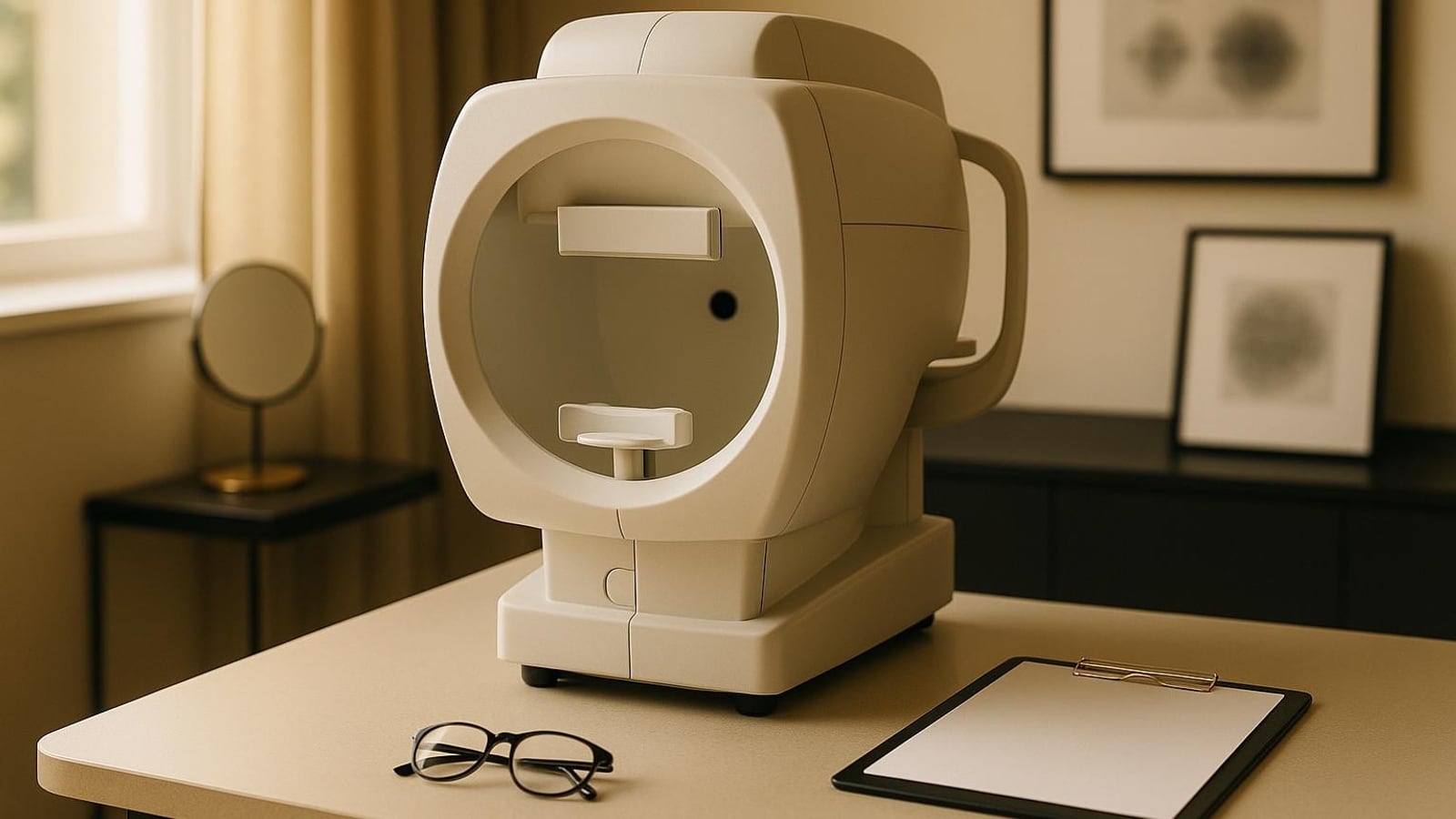
Every plan has its own rules, but functional review commonly depends on several categories of information. The exam may document how much skin rests over the upper eyelid, whether it touches the lashes, whether the eyelid margin is also drooping, and whether the brow is contributing. Photographs are usually taken in a standardized position. Visual field testing may be used to show whether the upper field improves when the lid or brow is lifted.
Symptoms matter too. Patients often describe lifting their forehead to see, tilting the head back, difficulty reading for long periods, reduced upper or side vision while driving, or heaviness that worsens later in the day. These details should be specific rather than vague.
Why extra skin alone is not enough
Many people have upper eyelid skin redundancy without measurable visual obstruction. In those cases, upper blepharoplasty may still be a reasonable cosmetic procedure, but it is not the same as a functional claim. A small difference in eyelid height, brow position, or visual field results can change the documentation picture.
It is also possible that skin removal is not the main answer. If the eyelid margin itself is too low, ptosis repair may be needed. If the brow is low, brow ptosis repair may be part of the discussion. Removing skin without addressing the true cause can leave the original problem partially untreated.
What patients can do before the visit
Write down the specific activities affected: reading, computer work, driving, hobbies, work tasks, or eye fatigue. Avoid taping your lids before the appointment unless instructed, because the surgeon needs to see the natural eyelid and brow position. Bring insurance information and prior eye records if you have had cataract surgery, glaucoma treatment, dry eye care, or previous eyelid procedures.
Helpful pages include upper blepharoplasty, ptosis repair, Florida Oculoplastics services, and schedule a consultation.
What documentation usually needs to agree
Insurance review is strongest when the story, exam, photographs, and testing point in the same direction. For example, symptoms of upper-field obstruction should match skin position on photos and any visual field loss shown on testing. If the brow is the main cause, the documentation may support brow ptosis repair rather than upper blepharoplasty. If the eyelid edge is low, the discussion may shift toward ptosis repair versus upper blepharoplasty.
Patients sometimes bring phone photos showing themselves lifting the brow or manually holding the lids up. Those can help explain the concern, but standardized clinical photographs are still needed because insurers review consistent views taken under controlled conditions.
What can delay approval
Coverage review can be delayed when symptoms are vague, photographs do not show obstruction, visual field testing is unreliable, or the wrong anatomical problem is documented. It can also be delayed if a patient has untreated dry eye, active allergy, recent eye surgery, or changing eyelid position. In those cases, it may be safer to treat the eye surface first or repeat measurements after the eyelids are stable.
A useful consultation question is: which part of my concern is being submitted as functional, and which part, if any, is cosmetic? That answer keeps the plan transparent before the office submits documentation.
Bottom line
Upper blepharoplasty may be covered when documentation supports a functional vision problem. If the goal is appearance alone, it is usually cosmetic. A focused oculoplastic exam is the clearest way to separate the two.
This article is educational and does not guarantee insurance coverage. Coverage depends on the patient's plan, documentation, and insurer review.
Written and reviewed by
Dr. Brandon Clair, MD, FAAO
Dr. Clair is a board-certified ophthalmologist and fellowship-trained oculoplastic surgeon focused on eyelid, brow, orbital, tear drainage, cosmetic, functional, and reconstructive oculoplastic care.
Learn about Dr. Brandon Clair's trainingExplore eyelid and brow servicesIf this topic relates to your concerns, learn more about our upper eyelid surgery or book a consultation in Largo.
Considering eyelid or brow care?
Florida Oculoplastics evaluates cosmetic and functional eyelid concerns for patients throughout Largo, Clearwater, St. Petersburg, Tampa, and the broader Tampa Bay region.