Orbital Tumors and Oculoplastic Evaluation: Symptoms and Next Steps
Orbital tumors can affect eye position, movement, comfort, and vision. Evaluation focuses on diagnosis, imaging, and coordinated care.
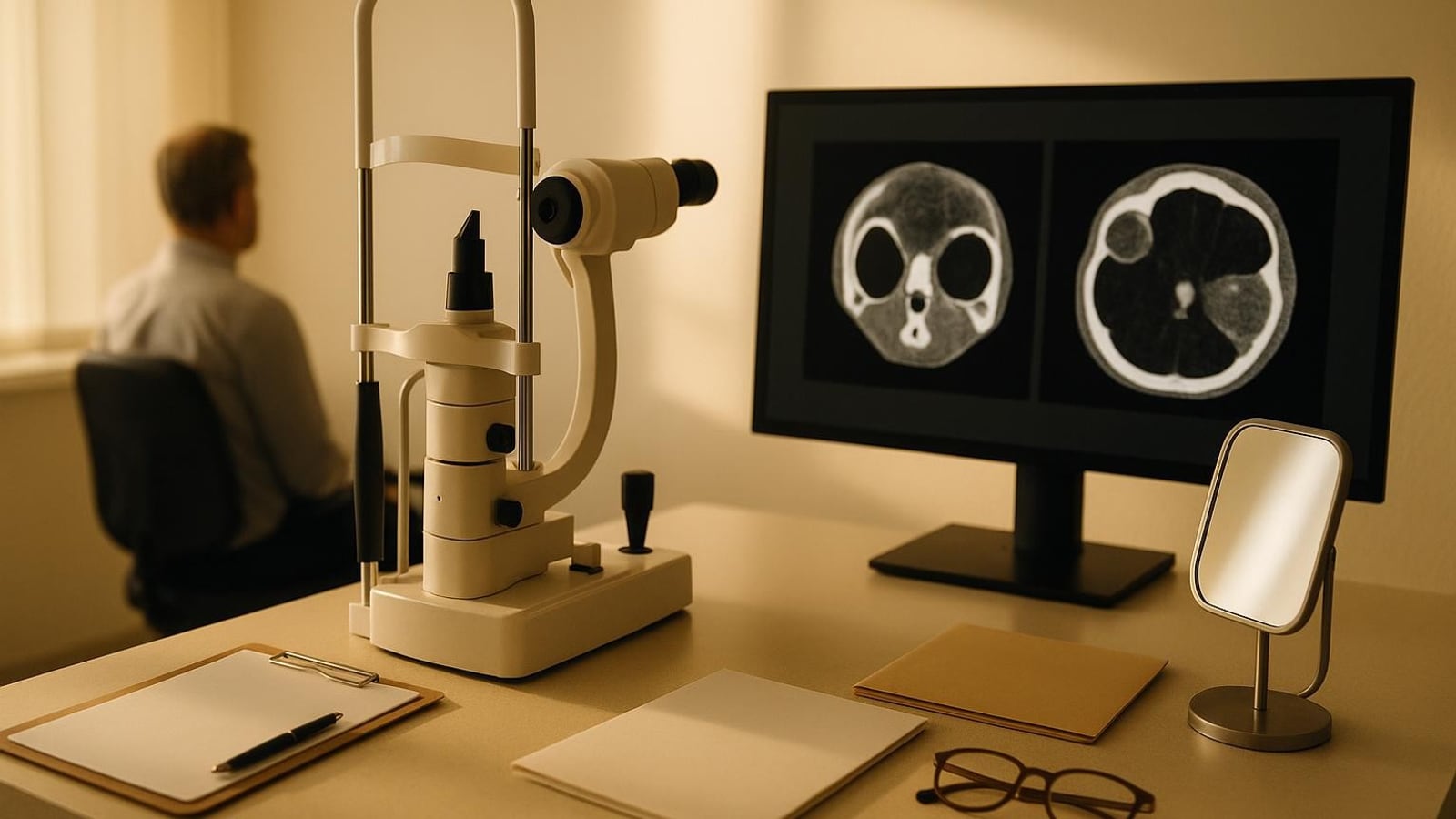
The orbit is the space around and behind the eye. A growth in this area can be benign or malignant, slow-growing or urgent, primary to the orbit or related to another condition. Because the orbit contains the eye, optic nerve, muscles, vessels, fat, and lacrimal gland, symptoms can vary widely.
An oculoplastic evaluation helps determine what is likely happening and what imaging, referral, biopsy, or monitoring may be needed.
Symptoms that can point to an orbital problem
Possible signs include one eye becoming more prominent, new asymmetry, pressure behind the eye, double vision, eyelid swelling, pain, vision change, restricted eye movement, a palpable mass, or the eye shifting position. Some orbital lesions are found incidentally on imaging done for another reason.
Not every symptom means a tumor is present, but persistent or progressive changes deserve evaluation.
What the exam may include
The exam may check visual acuity, pupils, color vision, eye movements, eye position, eyelid position, orbital resistance, sensation, and the eye surface. Depending on findings, imaging such as CT or MRI may be recommended. Prior scans, pathology reports, cancer history, thyroid history, autoimmune disease, trauma, or sinus disease can be relevant.
Next steps are individualized
Some orbital lesions are monitored with imaging. Others need biopsy or removal. Some require coordination with oncology, ENT, neurosurgery, endocrinology, rheumatology, or radiation oncology. The recommendation depends on location, behavior, symptoms, imaging features, and overall health.
Patients should avoid assuming that all orbital tumors require immediate surgery or that all are harmless. The goal is an evidence-based next step.
How urgency is determined
The urgency depends on vision, pain, speed of change, eye movement, pupil findings, systemic symptoms, and imaging history. A stable incidental imaging finding may need timely specialist review without being an emergency. A rapidly changing painful eye problem needs a different pathway.
Learn more about reconstructive and orbital care, Florida Oculoplastics services, Dr. Clair's background, and contact the office.
When orbital symptoms are urgent
Seek urgent eye or emergency evaluation for sudden vision loss, new pupil changes, severe pain, fever with orbital swelling, rapidly increasing eye bulging, inability to move the eye normally, or new significant double vision. These symptoms may reflect inflammation, infection, bleeding, optic nerve compromise, or another time-sensitive problem.
A routine appointment is appropriate for many slower changes, such as gradual asymmetry or an imaging finding that needs interpretation. The urgency depends on vision, pain, speed of change, and exam findings.
What imaging helps answer
CT and MRI provide different information. CT can show bone, sinus relationships, calcification, and some trauma-related details. MRI can better characterize soft tissue, optic nerve relationships, muscle involvement, and some inflammatory or vascular patterns. The right test depends on the suspected diagnosis.
After imaging, next steps may include observation, repeat imaging, bloodwork, biopsy, removal, or coordination with another specialty. The goal is to avoid both unnecessary surgery and delayed diagnosis. Patients with thyroid-related orbital symptoms may also find thyroid eye disease and oculoplastic care relevant.
Bottom line
Orbital tumors require careful diagnosis before treatment decisions. A focused oculoplastic evaluation can clarify the anatomy, risks, and appropriate next step.
Written and reviewed by
Dr. Brandon Clair, MD, FAAO
Dr. Clair is a board-certified ophthalmologist and fellowship-trained oculoplastic surgeon focused on eyelid, brow, orbital, tear drainage, cosmetic, functional, and reconstructive oculoplastic care.
Learn about Dr. Brandon Clair's trainingExplore eyelid and brow servicesIf this topic relates to your concerns, learn more about our reconstructive oculoplastic care or book a consultation in Largo.
Have new or severe eye symptoms?
Call the office for guidance about timely evaluation. Sudden vision loss, severe eye pain, rapidly worsening swelling, new double vision, or inability to close the eye should be treated as urgent and may require emergency care.