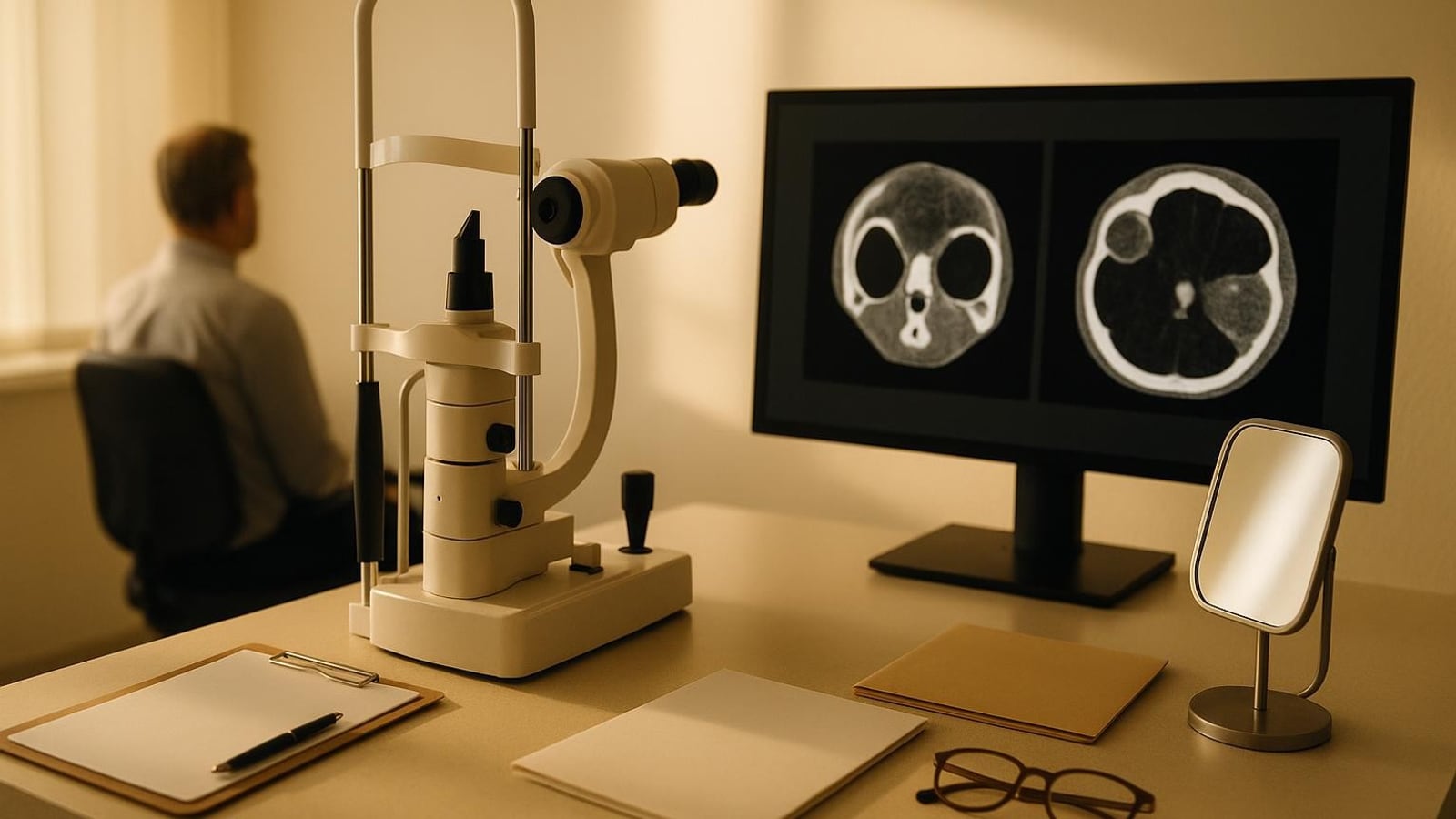
Thyroid Eye Disease and Oculoplastic Care in Tampa Bay
Thyroid eye disease can affect eyelid position, eye prominence, comfort, and appearance. Learn when oculoplastic evaluation helps.

Thyroid eye disease can affect the tissues around the eyes, eyelids, and orbit. It may cause eye bulging, eyelid retraction, swelling, pressure, double vision, dryness, tearing, or changes in appearance. Oculoplastic care focuses on protecting the eye, monitoring orbital changes, and planning treatment at the right stage.
Patients in Tampa Bay may also be working with endocrinology, ophthalmology, neuro-ophthalmology, or other specialists. Coordination matters.
Why timing is important
Thyroid eye disease often has an active inflammatory phase and a more stable phase. During active disease, symptoms can change. Treatment may focus on lubrication, inflammation control, smoking cessation, thyroid management, double vision evaluation, and monitoring for optic nerve risk.
Surgery is usually planned carefully around disease stability unless urgent problems require earlier intervention.
Eyelid and orbital concerns
Eyelid retraction can make the eyes look more open and can increase exposure dryness. Proptosis, or forward prominence of the eye, can worsen irritation and affect appearance. Swelling around the lids can fluctuate. Double vision can occur when eye muscles are involved.
An oculoplastic exam looks at eye position, eyelid height, closure, eye surface health, pressure symptoms, vision, color vision when indicated, and the pattern of orbital involvement.
Treatment categories
Care may include medical management, eye surface protection, orbital decompression, eyelid repositioning, strabismus coordination, or cosmetic refinement after stability. The sequence matters. For example, orbital decompression can change eyelid position, so eyelid surgery is often planned after larger orbital changes are addressed.
What coordinated care may include
Evaluation may involve eye surface treatment, measurements of eyelid position and eye prominence, double vision assessment, optic nerve checks, imaging review, thyroid lab coordination, and discussion of medical treatment options when inflammation is active. The goal is to understand whether the main problem is exposure, inflammation, muscle restriction, orbital crowding, or later-stage eyelid position.
Related resources include orbital and reconstructive care, eyelid procedures, about Dr. Clair, and request a consultation.
When symptoms need urgent eye evaluation
Thyroid eye disease can threaten vision when orbital swelling affects the optic nerve or when exposure severely irritates the cornea. Seek urgent ophthalmic evaluation for decreased vision, dimming or fading of colors, severe pain, rapidly worsening bulging, inability to close the eye, new major double vision, or a cornea that appears cloudy or painful. These symptoms should not wait for a routine cosmetic consultation.
Smoking history, thyroid control, selenium discussion when appropriate, double vision patterns, and prior imaging may all affect the treatment plan. Patients should bring endocrinology records and any CT or MRI reports if available.
Why surgery is staged
Thyroid eye disease surgery is often sequenced from deeper to more superficial structures. Orbital decompression, if needed, can change eye position. Eye muscle surgery, if needed, can affect alignment. Eyelid surgery is often planned after those larger changes are stable. This sequence helps avoid revising eyelid surgery because the orbital anatomy changed later.
Related orbital concerns are discussed in orbital tumors and oculoplastic evaluation, though thyroid eye disease has its own inflammatory pattern and treatment sequence.
Bottom line
Thyroid eye disease is not just an appearance issue. It can affect comfort, vision, eye protection, and orbital health. A staged, coordinated plan is often the safest approach.
Written and reviewed by
Dr. Brandon Clair, MD, FAAO
Dr. Clair is a board-certified ophthalmologist and fellowship-trained oculoplastic surgeon focused on eyelid, brow, orbital, tear drainage, cosmetic, functional, and reconstructive oculoplastic care.
Learn about Dr. Brandon Clair's trainingExplore eyelid and brow servicesIf this topic relates to your concerns, learn more about our reconstructive oculoplastic care or book a consultation in Largo.
Have new or severe eye symptoms?
Call the office for guidance about timely evaluation. Sudden vision loss, severe eye pain, rapidly worsening swelling, new double vision, or inability to close the eye should be treated as urgent and may require emergency care.